

My son Marcus was heading into fifth grade the first time I decided to pull him out of public school for a semester. I had been teaching third grade for seven years. I knew curriculum. What I did not know was how completely different it feels to be the only teacher in the room when the student is your own kid and you have three cats weaving around your feet while the lesson is happening. The biggest question I had was not about content. It was about structure: how do you build a real school day when it is just the two of you, no bell schedule, no department head checking your pacing?
The answer turned out to be simpler than I expected. A single, well-designed curriculum workbook can carry the whole day if you know how to use it. After testing multiple options in both my classroom and at home, the Carson Dellosa Comprehensive Curriculum of Basic Skills has become the one I recommend most often to parents who are just starting out. It covers all core subjects in one spiral-bound book, which means you are not juggling five different programs, five different pacing guides, or five different answer keys. This guide walks you through exactly how to use it as the foundation of your homeschool day.
If you want one book that covers math, reading, writing, science, and social studies without a planning binder the size of a dictionary, this is it.
The Carson Dellosa Comprehensive Curriculum workbook pulls all core subjects into a single, teacher-tested resource. Rated 4.7 stars from nearly 2,000 homeschool families.
Amazon Check Today's Price on Amazon →Step 1: Do a Cover-to-Cover Preview Before You Open It With Your Child
This step takes about thirty minutes and it saves weeks of frustration later. Sit down with the workbook alone, a notepad, and something to drink. Flip through every section and note which topics your child has already mastered versus which ones will be genuinely new. In the Carson Dellosa 5th grade edition, the math section moves through fractions, geometry, measurement, and pre-algebra concepts. The language arts section covers grammar, reading comprehension, vocabulary, and writing mechanics. A quick scan tells you where your child will need more time and where you can move faster.
While you flip through, mark two or three pages your child will find genuinely hard. You will want to plan for those days in advance rather than stumbling into them mid-morning. I use sticky tabs in three colors: green for review material, yellow for on-grade-level new content, and red for pages that will likely need extra explanation or a supplemental activity. This front-loaded investment means your daily lessons almost run themselves once you start.

Step 2: Build a Weekly Page Map, Not a Daily Lesson Plan
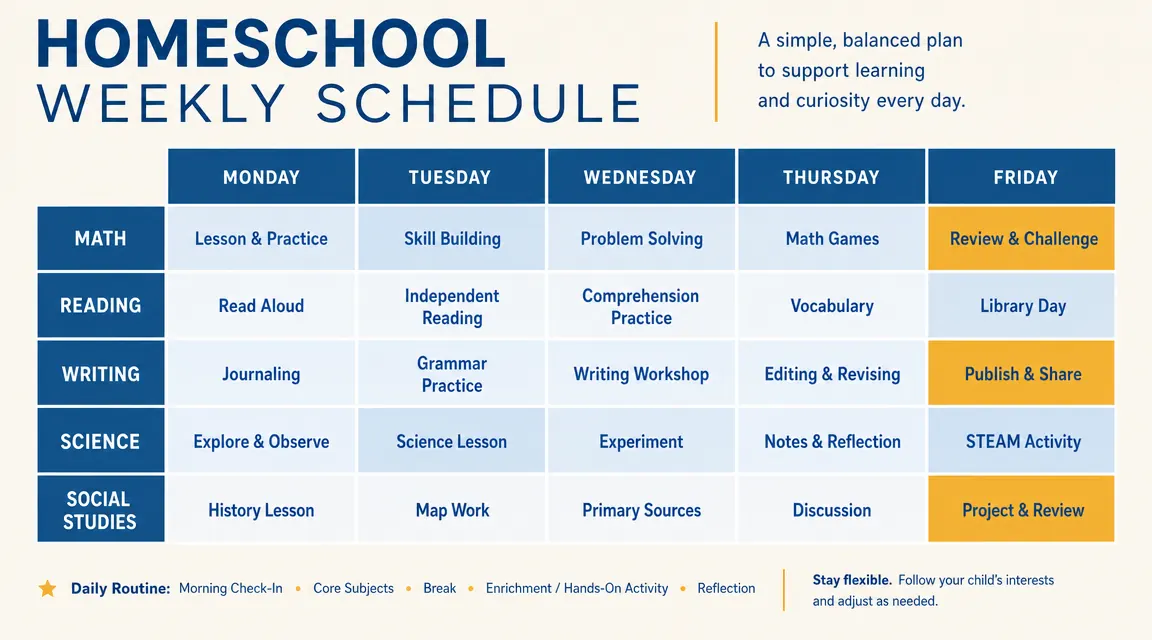
Most new homeschool parents over-plan the day and under-plan the week. What actually works, at least in my experience with Marcus and with the families I have coached, is a weekly page target rather than hour-by-hour scheduling. The Carson Dellosa 5th grade workbook has roughly 416 pages. A standard 180-day school year with four days of active instruction per week gives you about 144 instructional days. That works out to roughly three workbook pages per school day to get through the book in a year, which is entirely realistic without rushing.
I suggest writing out a simple one-page weekly map that lists each subject and how many pages you plan to cover Monday through Thursday, leaving Friday for catch-up, projects, or nature days. Posting this on the refrigerator gives your child visibility into the plan, which reduces the morning argument of 'how much do I have to do today?' They can see it. That visible structure matters more than most parents expect, even at home.
Step 3: Sequence Subjects by Your Child's Energy, Not by the Book's Order
The workbook organizes content by subject in large blocks. That is a logical way to print a book, but it is not necessarily the best order for a homeschool session. Most kids, and most adults, do their hardest cognitive work in the first two hours after they fully wake up. For Marcus that meant tackling math right after breakfast while his brain was fresh and saving the easier reading comprehension pages for after lunch. If your child dreads writing, put it early when resistance is lowest, not last when they are tired and frustrated.
You are not locked into reading the book front to back. Jump between sections based on what your child needs that day. The answer key at the back stays organized by section regardless of what order you work through it. I actually use a simple subject rotation: math, language arts, and one science or social studies page, then a break, then reading comprehension. That rhythm takes about two and a half hours for a thorough fifth-grade session, which leaves the afternoon open for hands-on projects, outdoor time, or reading for pleasure.
The book organizes content in big subject blocks. You are free to jump between them based on what your child needs that morning. The answer key stays organized no matter what order you work through it.
Step 4: Use the Answer Key as a Teaching Tool, Not Just a Grading Tool
One of the biggest shifts I made when homeschooling Marcus was changing how I used the answer key. In a classroom of twenty-four kids, the answer key is mostly a time-saver for batch grading. At home, with one child, it becomes something much more useful. When Marcus gets a math problem wrong, we do not just circle it and move on. We sit with the correct answer and work backward: what did the correct answer require? Where did his process break down? That conversation usually takes two or three minutes but it closes learning gaps that would otherwise compound.
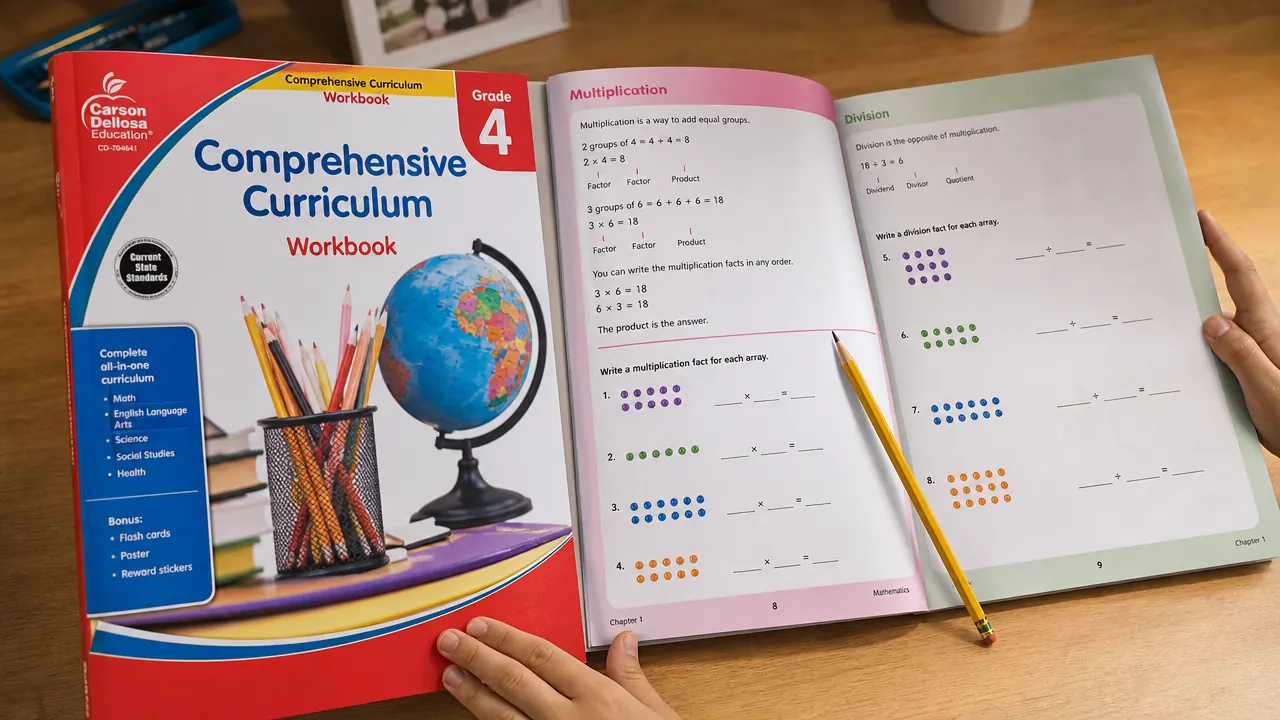
The Carson Dellosa answer key is clean and easy to use at a glance. It mirrors the page layout of the student book, so you can check answers quickly without having to hunt. For writing and open-response questions, the answer key provides model responses with space for your own judgment, which is the right call. There is no single correct way to write a paragraph, and the workbook does not pretend otherwise.
Step 5: Fill Gaps With Free Supplements, Not More Paid Programs
Every curriculum has gaps, and the Carson Dellosa workbook is no exception. Science and social studies pages are lighter than math and language arts, which is typical for an all-in-one workbook at this price point. The good news is that filling those gaps does not require buying another curriculum. I use free resources: NASA's student activity pages for science, Newsela's free tier for reading nonfiction, and Khan Academy videos for math concepts Marcus needs to hear explained rather than just read. The workbook sets the skeleton and the free tools add the muscle.
I keep a running gap list on a sticky note inside the back cover of our workbook. When I notice Marcus struggling with a concept during our session, I write it down. Friday is when we address those gaps before moving on to the next week's pages. This weekly review habit is the single most important thing that separates homeschool families who feel in control from those who feel like they are always behind.
What Else Helps
A few things have made our workbook-based days run noticeably better. A consistent start time matters, even if it is 9:30 rather than 7:45. The brain adapts to routine faster than most people expect, and Marcus now settles into focus within about five minutes of sitting down because the routine signals what comes next. We also use a simple sand timer for each subject block rather than a phone timer, because the visual of sand falling is less anxiety-producing than a digital countdown. Small things, but they add up.
Physical organization helps more than I initially thought. We keep the workbook in the same spot on the kitchen table every morning, pencils in a cup, and the answer key in a folder. When Marcus knows where everything is without asking, the session starts faster and with less friction. I also keep a second copy of the workbook for myself so I can preview upcoming pages the night before while watching TV. It takes about three minutes and it means I never walk into a lesson cold.
For families running multiple grades at once, the Carson Dellosa workbook is available for grades kindergarten through fifth. I have used the third-grade edition with my classroom students as enrichment and the pacing and content quality hold up across grade levels. If you have kids at different grade levels, buying the appropriate workbook for each is a much cleaner solution than trying to differentiate a single book across two grades.
Ready to stop piecing together four different programs and start your week with a single, proven plan?
The Carson Dellosa Comprehensive Curriculum workbook is the foundation my family comes back to every time we want a structured, no-fuss homeschool day. Grab the grade level your child needs and you are ready to go on Monday morning.
Amazon Check Today's Price on Amazon →